
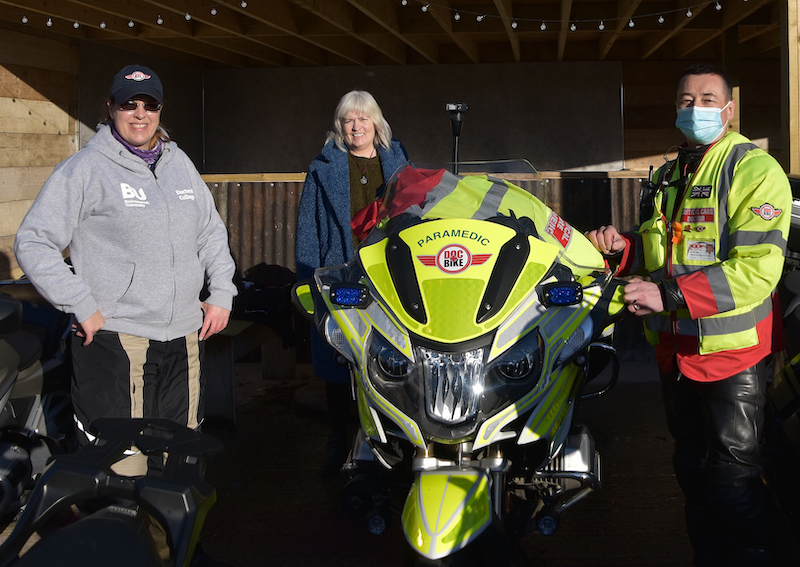
DocBike and Bournemouth University research suggests motorcycle collisions could be caused by riders and car drivers seeing different things
Media Release: 21 January 2022
A research project exploring motorcycle collisions and injury prevention, has found that there are differences in motorcyclists’ and car drivers’ visual attention because they may be viewing completely different things, despite being on the same stretch of road. For example, the brain naturally sees larger objects, like lorries, as threats as opposed to smaller objects such as motorcycles.
The project, led by Bournemouth University’s PhD researcher Shel Silva, assessed neurological and cognitive influences of motorcyclists and car drivers. Data indicates that car drivers and motorcyclists have different visual attention patterns, due to the different types of hazards according to the vehicle type. Additionally, motorcyclist’s identification, perception, and knowledge of potential risk changes depending on their motorcycling qualifications and experience.
PhD Researcher Shel said:
“The research is suggesting that by understanding motorcyclists’ knowledge and identification of risks it is possible to better inform training and materials which appeal to motorcyclists. It is key to understand that motorcyclists do not need training about how to ride a motorcycle but would benefit from more skills regarding how to read the road and other road users.
“I know friends and people who have died or suffered life changing injuries after being in motorcycle collisions. This research is really important to me and having the opportunity to help save motorcyclists’ lives is a personal honour.”
The research explored participants with varying levels of motoring experience and qualifications. It was made up of four main parts:
- Identifying motoring experience, training, and annual mileage
- Questionnaires about general risk propensity and need for excitement
- Eye-tracking by watching videos and viewing images of roads which have a high number of motorcycle collisions
- Optional semi-structured interview for motorcyclists.
Shel suggests that an effective way for a motorcyclist to be seen when approaching a junction is to make a lateral movement such as moving towards the centre of the road near the white lines. This is because the movement of the motorcycle can trigger a visual orienting response in other road users, consequently drawing their attention to the motorcyclist. Other key aspects why a motorcyclist is not seen include:
When driving, the brain can experience saccadic masking, which is where it fills in the information when moving the eyes from one point to another and consequently a motorcyclist can be obscured in the saccadic mask.
The eye has a natural blind-spot where the optic nerve exits the eye. There is also potential for the nose to obscure vision and at a junction a motorcyclist is easily lost.
Evolutionarily the brain has developed an interest in things which are threats; historically this was large objects or animals. Nowadays this would be buses and lorries, not small motorcycles. Consequently, a motorcycle can easily be lost within the visual field especially if there is a large vehicle immediately behind the motorcycle.
The brain is good at judging speed but in relation to something else such as a fixed point. When performing the ‘two-second rule’ distance judgement while driving or riding, a person uses a fixed point to compare with, but due to their small size a motorcycle is difficult to judge.
Research is starting to uncover ‘looked but failed to remember’ errors. Motorcycles are often seen but not remembered by the motorist. At the beginning of the biking season there is less expectation to see motorcyclists because most bikes have not been used during winter. Towards the middle of the season motorcyclists are much more expected and therefore other road users are looking out for them.
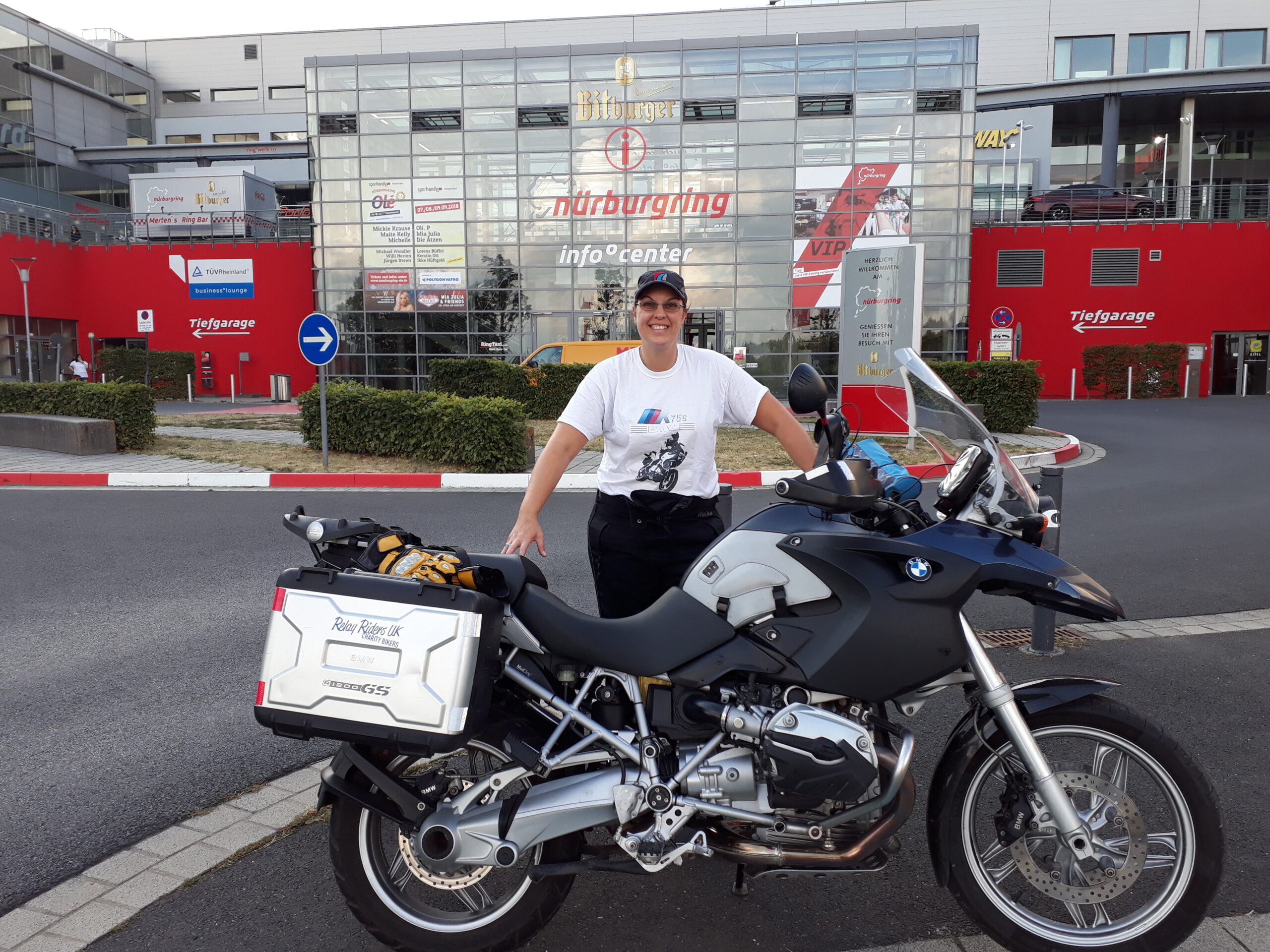
Shel has been a motorcycle rider since the age of four and currently owns five motorbikes. She has a strong background in psychology after completing a BSc and MSc in Clinical and Developmental Neuro-Psychology with Bournemouth University, followed by several years’ work using psychological principles with special educational needs pupils in schools throughout Dorset. Shel is also a member of the DocBike Research Team and an on-the-road volunteer for the charity.
DocBike is the only injury prevention charity in the UK which is solely dedicated to the reduction of harm in motorcyclists through research. Evidence base and research form the cornerstones of everything that DocBike does; from engaging with motorcyclists at public events, to presenting findings to national stakeholders such as the Department of Transport and Highways England. The partnership between DocBike and Bournemouth University to match-fund the PhD studentship is truly pioneering and will bring significant benefit to motorcyclists across the UK.
The collaborative project will enable DocBike to build upon its current research to prevent motorcyclists from being involved in a collision, whilst also identifying if its engagement strategy is effective in preventing harm. The research findings will be shared with the charity’s national stakeholders to help shape and coordinate a collaborative response, with which to direct injury prevention for motorcyclists in the UK for the future
The data collection aspect of the research is in process and Shel is still actively recruiting participants. If you would like to take part, please email: shel.smith@docbike.org
Related Posts:
DocBike Wales Reaches Key Milestone
Since the start of the year, a vast amount of work has been going on in the background at DocBike to set up a new branch in Wales. After seeing the successful launch of the charity in Dorset, Dr Rob Dawes who is a Consultant in Anaesthesia and Prehospital Care at...
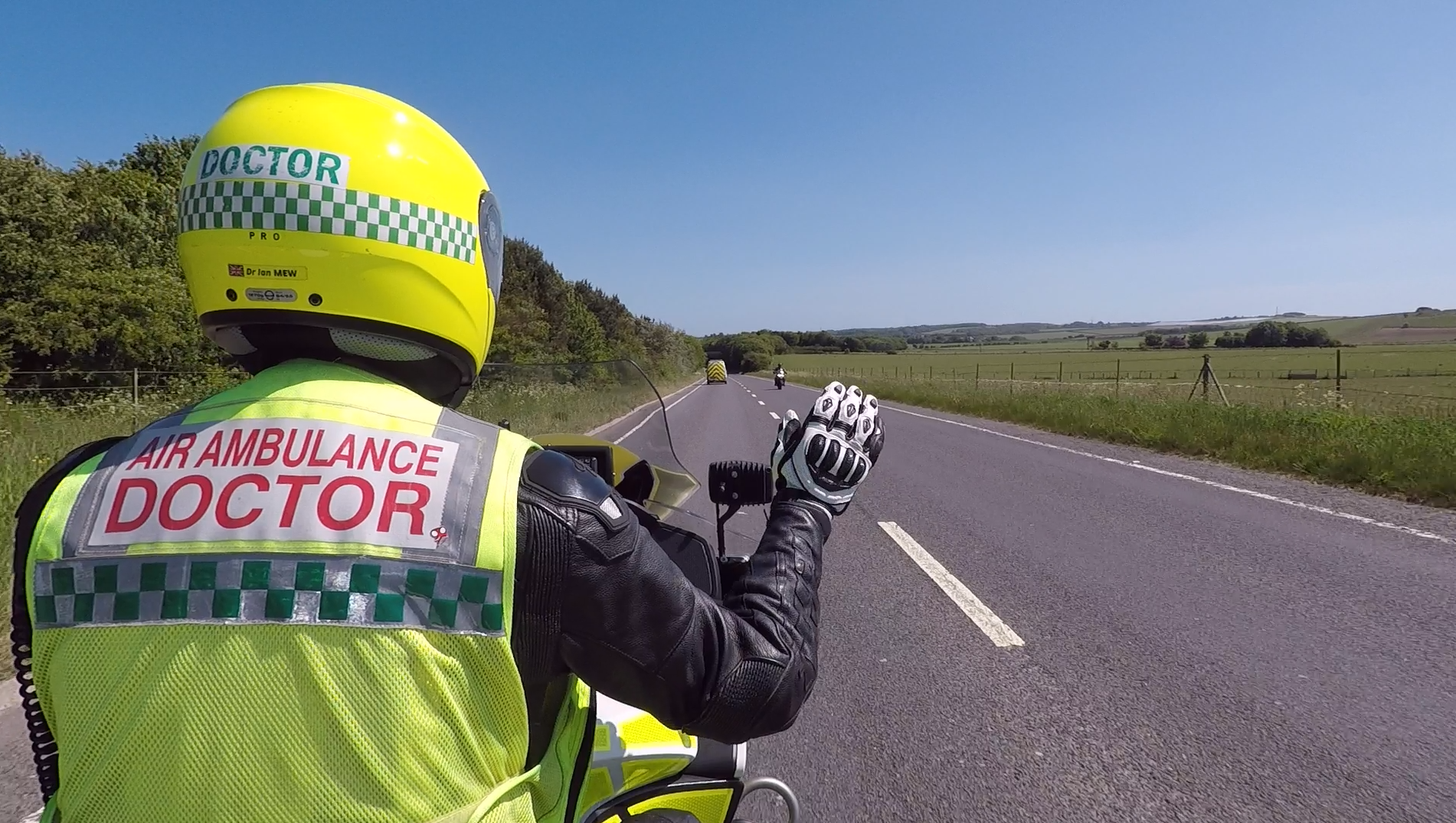
Dorset DocBike Back Out on Patrol!
After a busy few months on Intensive Care with COVID-19, Dr Ian Mew has been back out on patrol with the Dorset DocBike. Travelling some 190 miles on patrol and meeting up with colleagues on the Dorset and Somerset Air Ambulance helicopter and outreach car, the bike...
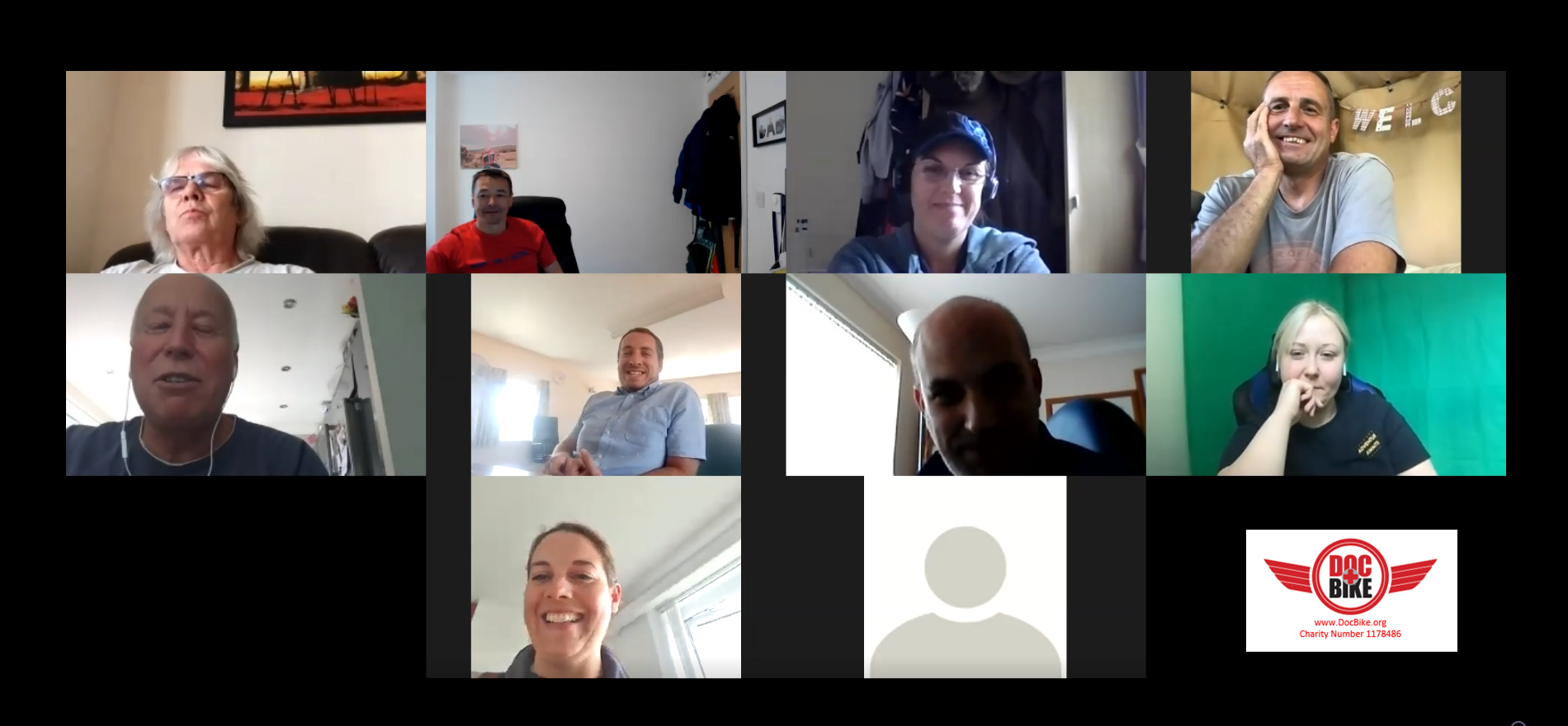
Restricted by COVID – But by No Means Beaten!
That was clearly the message when volunteers from the Dorset branch of DocBike met online for a virtual get together. Whilst the charity has been expanding nationally, work within the Dorset region has been diverted to provide...